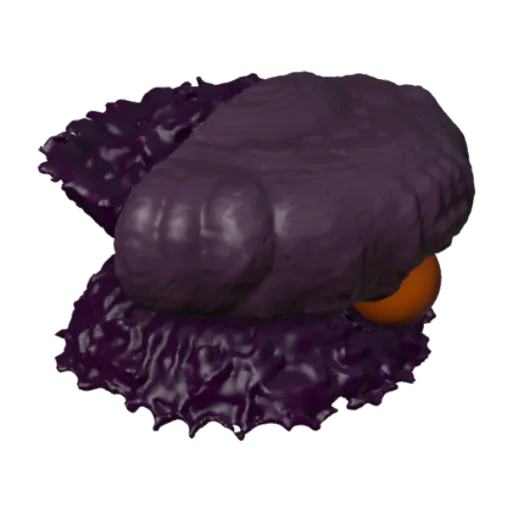
U Scorpii
by Smithsonian Astrophysical Observatory
A nova is a star that suddenly becomes tens to hundreds of times brighter, then fades to its former brightness in just a few months. In these nova systems, a white dwarf — the compact remains of a Sun
Download
- glbGLB, web resolutionu-scorpii.glb · 7.1 MBDownload GLB, web resolution
- Triangles
- 149,999
- Vertices
- 91,396
- Materials
- 1
- Textures
- 3, up to 4096px
- Size (W × H × D)
- 1.82 × 1.36 × 1.92 m
- Rigged
- No
- Style
- Realistic
CC0 (public domain)
Free for any use, commercial too. No credit needed.
- Use it in games, films, apps, ads, 3D prints and school work
- Sell what you make with it
- Change it, recolour it, cut it up
- Share the file itself
- Claim you made the original
Checked before it was listed
- Scanned for malware
- Opened and measured: the facts on this page come from the files
- No scripts or programs inside the download
- Licence confirmed at the source
File fingerprints (SHA-256)
u-scorpii.glb: 0495dbb0e8fc8ca39494b7bd0534fb6fba8d0abe442df605dc0a1a158eba1e56
Made by Smithsonian Astrophysical Observatory
A nova is a star that suddenly becomes tens to hundreds of times brighter, then fades to its former brightness in just a few months. In these nova systems, a white dwarf — the compact remains of a Sun-like star that has burned all of its fuel — pulls material from a nearby companion star until enough accumulates to trigger a thermonuclear explosion on the white dwarf’s surface. The model of such a nova outburst of an object called U Scorpii is based on a scientific simulation, informed by observations. It explores the first 18 hours after the last outburst observed on January 28, 2010 in the system. Astronomers have seen U Scorpii - which is about 40,000 light years away from us - erupt about once every decade, so this system is due for another outburst very soon.
Description Credit: Credit: INAF-Osservatorio Astronomico di Palermo/S.Orlando; NASA/CXC/SAO/A. Jubett, et al.
From Smithsonian Astrophysical Observatory, released by the Smithsonian under CC0 through its Open Access programme. The Smithsonian does not endorse ModelsXi. Its own page has the object record and other copies, including full-resolution and print-ready files where they exist.
More space and sci-fi
 Free
 Free
 Free
 Free
 Free
 Free
 Free